Saturday, April 23, 2011

Have fun at Menteng Indonesia

One of Jakarta's most pleasing historical inhabited closed societies, Menteng today still reveals the original early 20th century Dutch apparition for the region. Glossy modern houses coexists with traditional majestic homes along restful tree-lined boulevards, offering Jakartans and tourists alike a glance into a previous era with some of the pleasures of its gentler pace of life. There is much to explore in Menteng, from its chronological buildings and antiques marketplaces to its stylish eating shops and sole retail outlets.

Music at Taman Suropati
This eventful little park is located in a horseshoe of spectacular and well-preserved 1920s houses that are now home to Jakarta's administrator and several ambassadors. It is famous for its statues by artists from  Asean countries. On Sundays or public holidays, it drawn courting couples and picnicking families, with artists selling their works, provisions vendors hawking gado gado (vegetable salad with peanut sauce) or fried tauho (bean curd), and street performer entertaining the crowd.

Come on a weekend and you'll find young musicians making sweet music with their violins, violas and cellos - and shows appreciation to Pak Ages, who organizes free melody lessons for kids. 


Bargain at Jalan Surabaya
Jalan Surabaya is an establishment in Menteng, and no antique collector or flea market buyer visiting the city should give this a miss. Small, orderly shops sit in a row along this one-way avenue, offering everything from brassware and stranded china to classical instruments and leather tools. Be prepared to be overwhelmed by some light-hearted bargaining. Don't be astound to see workers squatting on their tenderloins a few meters away, shamelessly ageing the wares with shoe polish.

My favourite stall is number 109 where you'll find Pak Tizar using photographs of real people to make scary realistic stiff puppet replicas or wayang kulit. Ask to see the photos of the puppets presented to public figures, regulators, and even US President Barack Obawa.

Tuesday, April 12, 2011

Historical Malacca

A place steeped in an old memoirs, Malacca was once a trading post of flavors with dealers arriving from all places of the world. Malacca has a colorful olden times with her originator, the Melayu sultans, followed by interference from the Portuguese, Dutch and the Chinese, thus creating a very miscellany of different communities.

Journey to Malacca from Kuala Lumpur, the capital of Malaysia passes charming plantations of oil palms and rubber estates, dotted with occasional villages. The tour to Malacca should begins at the river-mouth, once called as the "Venice of the East". The presence of appealing looking wooden boats laden with mangrove logs and charcoal for barter goods is a reminder of a business being practiced centuries ago.

Tourists are recommended to take a stroll through the narrow Heeren Street and view fine old Dutch buildings from the 17th Century.  Do visit the Baba Nyonya Heritage Private Museum, the only of its kind in the country. A guided tour the  heritage of the Peranakans, a unique culture born of a fusion between Malay and Chinese traditions.

Walk along Jonkers Street which is noted from its antiques shops. Visitors should continue with a stroll on Harmony Street to see Kampung Kling Mosque, an old mosque with Sumatran architecture. Then move on to Cheng Hoon Teng temple, founded by Kapitan China Lee Wei King, a escapee who fled from China during the Ming Dynasty. Next, please then drive to see the Christ Church, the red-hued Malacca Dutch Square, and the unmistakeable Studhyus (one used as the home for the Dutch Governor) which serve a memory of the Dutch power in Malacca during the old days.

Pay a visit to Padang, Merdeka to see the remaining memoir of a Portuguese fort called A 'Famosa with Porta Santa as the presented gateway of the fortress. Get to climb up St. Paul's Hill to explore St. Paul's Church, a roofless property where lays a statue and empty burial chamber of St. Francis Xavier.

Before leaving Malacca, do drive around Bukit China (the Chinese Hill) to see the largest inherited burial graveyard of the early Chinese of Malacca out of China.

Wednesday, April 6, 2011

The Old Batavia Sideseeing Trip in Jakarta

Jakarta starts its memoirs in the 14th century as a little quay city and today become a lively metropolitis. Old Batavia's center point is the 'Kota' area now. Kampoeng the Old Batavia Tour present the distinctiveness of Jakarta with diverse blends of civilization and traditions.
Some fascinating attractions illustrate as follows:


Kota Intan DrawBridge
In the 18th Century, Kali Besar areas was a very modish suburban neighborhood along the great canal of Cilliwung river. At the north end of the Kali Besar lays a small 17th Century Dutch drawbridge, the last in the city, called the Kota Intan Drawbridge.


National Museum
The National Museum, built in 1862, is the best museum in Indonesia and is reputedly one of the finest in Southeast Asia. The museum has an huge compilation of cultural objects of the different ethnic categories - model houses, musical instruments , costumes, various fine bronzes from the Hindu-Javanese period, as well as many attractive stone pieces picked up from Central Java and other temples.
There's also superb display of Chinese stoneware dating back to the Han empire which was almost entirely stored up in Indonesia.

Sunda Kelapa Harbor
This more than 400 years old waterfront area was a very important link to the markets of the outside world for the 15th Century kingdom. Since then this port has belonged to the Portuguese and Dutch. The harbor is still one of the most crucial calls for sailing vessels from all over places in Indonesia, that serves as an central point of exchange of shipping goods to and from the outer islands. This is one of the finest attraction in Jakarta.

Glodok
Glodok is the heart of Jakarta's China Town. It is now hawkers, banking, entertainment and trading center. Visit to Petak Sembilan Chinese Temple dedicated to the Buddhist goddess of Mercy, Kuan Yin. Developed in 1650, it was on the earliest center of worship for the Batavian Chinese.

Fatahillah Museum
Built in the 16th century, the museum is housed in the old town hall of Batavia, which is probably one of the most solid reminders of Dutch rule to be found in Indonesia. It provides the historic background of Jakarta through a display of maps and antiquities, including porcelains and furniture. 

Built in the 16th century, the museum is housed in the ancient town hall of Batavia, which is perhaps one of the most firm reminders of Dutch rule to be found in Indonesia. It grants the historical background of Jakarta through a pose of ancient artifact and maps, including ceramics and furniture.

Monday, March 28, 2011

Jakarta History Museum and Ragunan Zoo

This museum, housed in the old Batavia Town Hall, is probably the most solid reminder of Dutch rule anywhere in Indonesia. The large, bell-towered hall was built in 1627 and served the administration of the city and the law courts. These days, it's the place to go if you're into heavy carved furniture and other memorabilia from the Dutch period. Among the more interesting exhibits is a series of gloomy  portraits of all the Dutch governors-general and early pictures of Batavia. The Fine Art Ceramics and Puppet Museums are all in waiting distance.

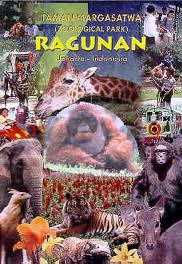
Ragunan Zoo

Formerly named as Taman Marga Satwa Jakarta before 1974, Ragunan Zoo is home to some 4,000 animals and over 50,000 plants of around 1,000 various species. Covering  135 hectares of land in the Ragunan area, Ragunan Zoo also provides itself as the unofficial botanical garden and a water catchment area for Jakarta.

On weekends, the zoo is usually very crowded with visitors pouring from all parts of the Capital as well as other nearby cities such as Bogor and Bandung. They are all eager to see the animal correction, in which the primary focus is still on Indonesia animals and only about a third come from all over the world. Here, you can take a closer look of the beautiful birds of paradise, the Sumatran tiger, the exquisite Komodo dragon, and many more.

Tuesday, March 15, 2011

Hiking at Sai Kung, Hong Kong


Sai Kung is unusual in that its villages possess more churches than temples. This is due to the vigorous passion of missionaries like Father Volonteri, an Italian priest who tramped this peninsula in the 1860s, long before the New Territories were leased to Britain. Many residents then converted to Catholicism. While the liturgy was conducted in Latin, the European priests often learnt Hakka to communicate with the local people.

As you walk beside the wide rivulet to enter Sai Wan, its small ruined church can be seen in undergrowth to your right. The peaceful village makes a living these days from providing drinks to passing hikers; three or four cafes are open, selling the usual range of beer, tea, noodles and fried rice. One of the elderly restaurateurs has a broad Mancunian accent as a result of working in England as a youth, formerly a common practice among New Territories villagers.

No sign of an economic downturn here. Business is stimulating and village, especially on weekends, offers a choice of sea view restaurants with expanded menus and supplements its income by renting beach supplies. There are two beaches, both with lovely stretches of sand. The trail leads through the village to cross a bridge and heads north over the rocks and then through tall grasses which back the wide beach, bounded by a tidal creek. Pools lie upstream. At the far end, you're obliged to turn inland to cross the  bridge - unless the tide is out, in which case you have direct access to the  mounting coastal path.

Saturday, March 5, 2011

Alila Villas Hadahaa at Maldives


The  first luxury resort in the idyllic South coral reefs of the Maldives, Alila Villas Hadahaa offers the definitive in privacy, with the nearest inhabited island some 10km away. Of the 50 modish, minimal-impact villas that constructed with minimal destruction to the natural environment, 14 are strung out along a jetty over a effervescent coral reef while the rest are scattered like seashells on a pristine spit of land.

For a inspirational sunset vista, you can't do better than Aqua Villa 51. Alighted at the end of the jetty, a brilliant ocean scene awaits just outside your window. If you're staying at any of the Island Villas, make sure to marinate up the wonderful bathrooms, complete with deep terrazzo tubs and outdoor showers.

Guests should also make time for Journeys by Alila, customized three-day experiences that give you an insight into the culture, life and history of the Maldives. Choose from snorkeling tours that show you about island and coral isle organization, tour visits to a local traditional village, Maldivian cooking sessions, nature trail walks with a resident biologist, play with dolphin, or diving with manta rays.

Save your stomach for Buttuta's, the only native eatery among the top properties on the Maldives, and enjoy a taste of neighboring cookery with the dishes like char-grilled chicken marinated in pomegranate molasses or snake gourd salad. Then cosy up on the padded swings at the hotel's Bell's Bar as you join in of their sexy cocktails.

Monday, February 28, 2011

The Beauty of Shibamata, Tokyo

Shibamata of Katsuhika Ward is surrounded by a river and greenery. There are chic attraction such as parks with homely tastes, and temples and structures showing a long history.

Shibamata Taishakuten Temple and the approach
Entering through the old wooden gate called Niten-mon, visitors will see attractive structures including the main hall and other structure enshrining Taishakuten. There is a garden with a waterfall offering the natural beauty in four seasons. The approach to Taishakuten is a popular attraction with a number of food paradise such as Dangoya (dumpling shops) and Senbeiya (Japanese rice cracker shops) at either side of the road.

Mizumoto Park
The park has a drainage basin which has a long history. Visitors can enjoy seeing the forest park and aquatic plants like Japanese irises in the natural setup. The “Japanese Iris Festival” is held in June. Also popular is a bird sanctuary that was arranged in the waterfront in the natural environment.

Katsushika-ku Yamamoto-tei
The house of Yamamato Einosuke, a businessman in the Taisho era, is publicly shown. There are many attractions including a warehouse, a tenement house with a gate that combines Western and Japanese styles of architecture, and a beautiful garden arranging a fountain pond and a small artificial hill. There is a corner for a tea shop where visitors may take a rest after strolling at Shibamata.

Yagiri no Watashi
There is one of the ferries established as ferries floating across Tonegawa River by the Tokugawa government in the early Edo era. The ferry is also well-known thanks to “Nogiku-no-Haka”, a novel by Itoh Sachio and “Yagiri-no-Watashi”,  a hit popular song. A ferryboat is available for visitors to ride.
 
Katsushika Shibamata Tora san Museum
This is a memorial hall for “Otokowa Tsuraiyo”, the comic film series that was a bug hit with Atsumi Kiyoshi starring under the directorship of Yamada Yoji. Exhibited are materials offering the world of Tora-san including the studio set used in the movie making, models and films, which visitors will be able to enjoy to seeing.

Kanamachi Purification Plant
This is one of the major water purification plants of the Tokyo Water Supply System. It takes in water from the Edogawa river and supplies water to midtown Tokyo. The water purification capacity of 15 million cubic meters is one the largest class in Japan. The plant is open to the public during the time of cherry blossoms (early June), the week of the water system and on the Day of Metropolitan Citizen on October 1st.